


Corban Theatre Brings the Story of Corrie ten Boom to Life in The Hiding Place
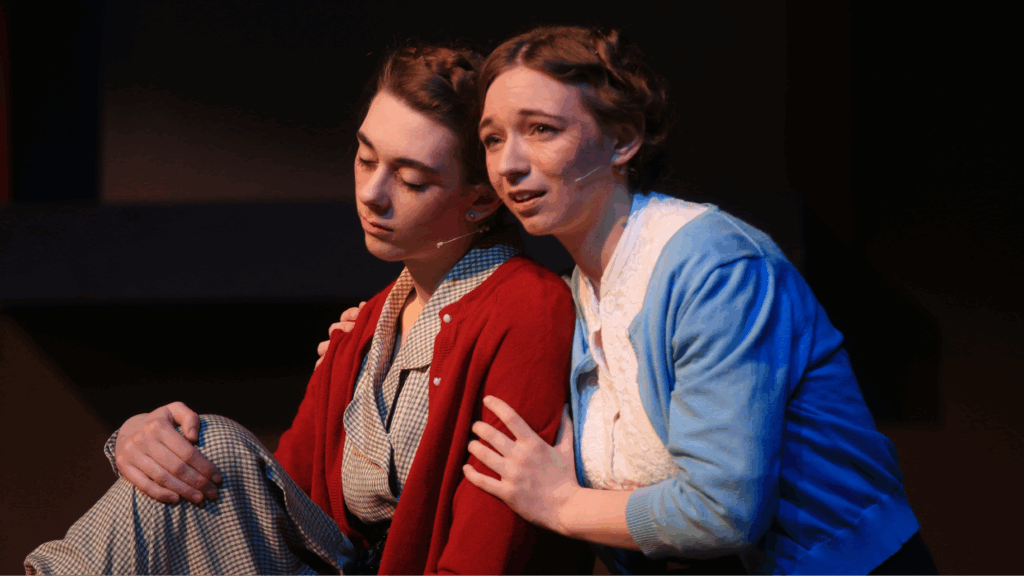
“Where is God when terrible things happen? … In the people who love Him, who experience the reality of His presence and who allow His love to overflow onto the people around them.”
— Corrie ten Boom
Corban University Theatre’s production of The Hiding Place, written by Bradley Winkler and running through March 15 at the Psalm Performing Arts Center, brings Corrie ten Boom’s story of human struggle and divine grace to the stage with powerful relevance for today.
Adapted from John and Elizabeth Sherrill’s book of the same title and based on real events, The Hiding Place follows the ten Boom family’s courageous effort to shelter and save Jewish people in Nazi-occupied Holland. What Corban’s talented actors deliver is not a pleasant production—it is essential.
Directed by Tamara McGinnis, The Hiding Place asks its audience to wrestle with serious topics such as the problem of pain, God’s goodness in times of trouble, and the power of forgiveness when it seems anything but deserved. Thoughtful staging and meaningful performances by the cast ground these themes in a way that resists drawing the curtain on the harsh realities of human suffering while also shining a light on the transforming power of faith, hope, and love.
“The ten Boom women were in their 50s and 60s when this happened. These weren’t superheroes. They were ordinary people,” McGinnis says. “They remind us that you can make a real difference simply by making small choices every day. Everywhere they were sent, small acts of kindness began to appear because love and peace had entered the room.”
At every turn, Corrie and her sister Betsie, played by Neleah Watkins and Elise Johnston, are presented with challenges: joining an underground resistance, hiding the unhideable—the ill, elderly, and asthmatic—suffering through prison, isolation, and concentration camps, unrelenting grief and immeasurable loss. But it is not these events that give the play its legs. It’s in the small human moments, watching two sisters turn pain into purpose, that The Hiding Place begins to shine.
“These stories are inspiring, but they are also disturbingly real,” Watkins says. “The show has given me perspective and a deeper love for the God who is present in both the family meals and the concentration camps. And that is exactly why I want people to see this show. I want them to be able to experience the ugly parts of the ten Boom’s story and be all the more amazed by God’s grace.”
The cast’s faithful treatment of these real human characters allows us to wonder alongside Corrie, “What good could come from a place like this?” And what good could God possibly bring from a flea?
What results is a drama that is as instructive as it is artful. Heavy with symbolism and challenging ethical scenarios that carry real moral and spiritual weight, The Hiding Place does not shy away from real pain and real challenge. Instead, it offers its audience a chance to learn and grow.
“Even if life is going well right now, all of us eventually face moments where we don’t know where to go from here,” McGinnis says. “How do we get through hardship? How do we deal with difficult people? This play is a beautiful picture of how we take what we believe about God and Scripture and apply it to everyday life.”
As Corrie ten Boom herself once said, “How often it is a small, almost unconscious event that makes a turning point.”
The Hiding Place may not be a light-hearted play. But it is filled with light and full of heart—a powerful experience for any audience. “I think love is the main message,” says Elise Johnston. “In the end, as Betsie says, ‘there is no pit so deep’ that the love of Christ cannot penetrate.”
In the midst of a hurting and divided world, McGinnis and Corban’s cast believe audiences will glean hope from this production and from the enduring words of Corrie ten Boom herself: “If people can be taught to hate, they can be taught to love.”